Focus on creating a layered defense system with strategic traps and a fortified structure to maximize your base's survivability during Blood Moon hordes.
Understanding Blood Moon Horde Dynamics
Blood Moon hordes are the most intense zombie events in 7 Days to Die. During Blood Moons, hordes relentlessly target players, becoming faster, stronger, and more all-encompassing. These hordes will prioritize direct paths to reach players or structures, using jump mechanics and digging capabilities if necessary. Understanding their targeting behaviors helps players design bases that exploit these mechanics and redirect hordes toward strategic traps.
Key Points:
- Blood Moon hordes occur at regular intervals and impose a survival challenge with escalating difficulty.
- Zombies prioritize direct access routes to players, adapting their behavior during Blood Moons.
- Base placement in elevated and defensible areas can reduce entry points and improve survivability.
Core Base Protection Strategies
Building a sturdy and survivable base for Blood Moon defense requires strategic planning to manage horde movements and mitigate structural damage. Below are step-by-step strategies to fortify your base against the zombie onslaught.
steps
Select an Elevated Location
Build your base on elevated terrain or create raised platforms for added defense. Elevated bases force zombies to use ramps or climb, slowing their advance and potentially funneling them into traps.Reinforce Structural Integrity
Use durable building materials such as reinforced concrete or steel to minimize the risk of collapse. Proper structural reinforcement is vital during later waves when demolition zombies appear.Design Narrow Entry Points
Narrow choke points with controlled access areas help concentrate the movement of zombies. Use doors, ramps, and drop tunnels to make zombies predictable.Integrate Escape Routes
Always include secure escape paths for emergencies. Fallback positions or hidden exits can provide critical survivability in situations where defenses are overwhelmed.
Effective Use of Traps and Defenses
Installing traps and defensive systems tailored to Blood Moon hordes can dramatically increase the longevity of your base and minimize resource costs from repairs.
prerequisites
- Spike Traps: Install spike traps at choke points to slow and damage incoming zombies. Position spikes along the direct access paths zombies tend to prioritize.
- Electrical Fences: Place electrical fences to inflict damage while interrupting horde movements. Combine these with ramps or walls for layered protection.
- Turrets: Use auto-turrets and SMG turrets for active defense but within their supported stability limits.
- Lighting Systems: Strategically install lights to improve visibility during nighttime hordes, aiding in targeting zombies from a distance.
- Land Mines: Use sparingly around vulnerable spots for key areas such as fallback routes.
Fortifying Against New Zombie Types
Recent updates have introduced more powerful special zombies, such as demolition zombies with explosive capabilities, requiring updated strategies.
FAQ for New Players
Answering Blood Moon base-building questions for players of all experience levels.
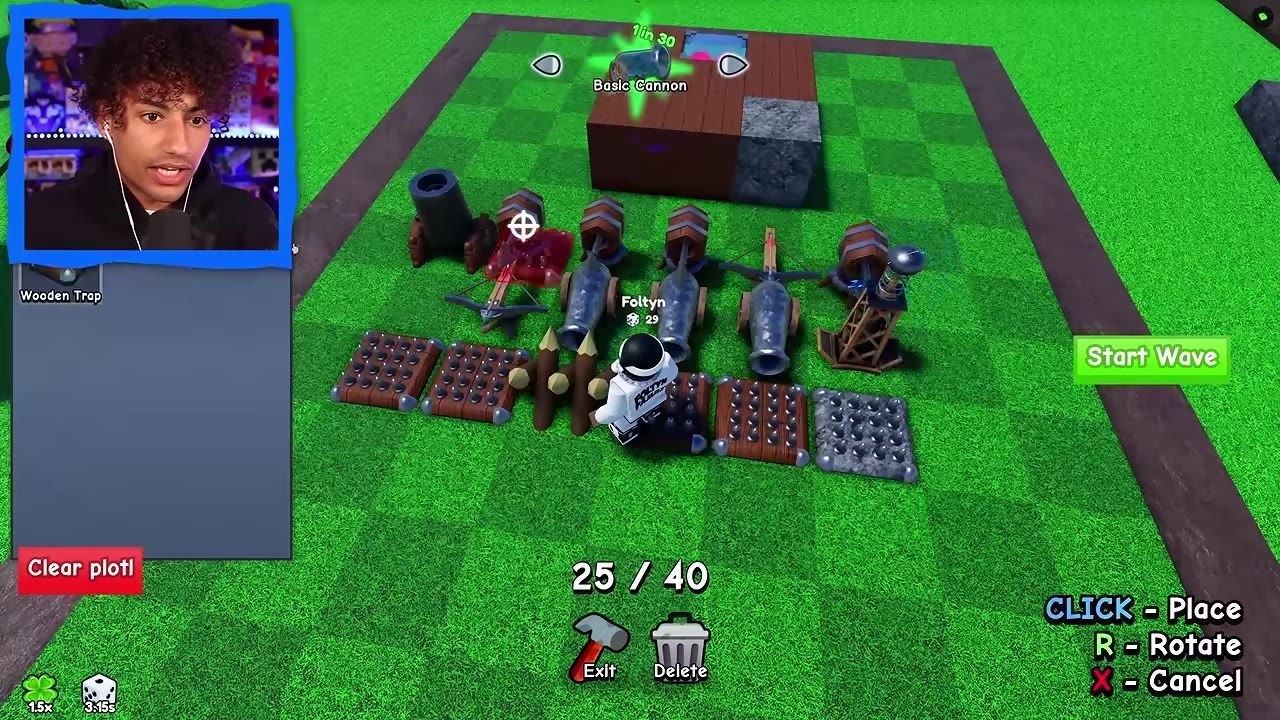
An example base layout designed for fortifying against enemies, featuring arranged traps and cannons. — Foltyn
FAQ
how to build a sturdy base for blood moon defense
To build a sturdy base, focus on elevated platforms, reinforced concrete or steel walls, and narrow entry points augmented with traps like spike traps or electrical fences. Include escape routes for emergencies.
best structures to survive large hordes in 7 Days to Die
Elevated platforms combined with choke points, reinforced material walls, and layered defensive systems such as auto-turrets, spike traps, and electrical fences work best against large hordes.
Sources
Screenshots on this page are frames from the videos below, used to illustrate the steps they describe. All rights remain with their creators.
- ROBLOX BUILD A BASE RNG.. — Foltyn, August 2, 2026
Checked against:
- V3.2.0 Stable — Hated, 2026-08-26
- V3.2.0 EXP - b9 Update — Hated, 2026-08-19
- V3.1.0 Henpocalypse Stable Release - MP Invite Bug Hotfixed — Hated, 2026-07-27